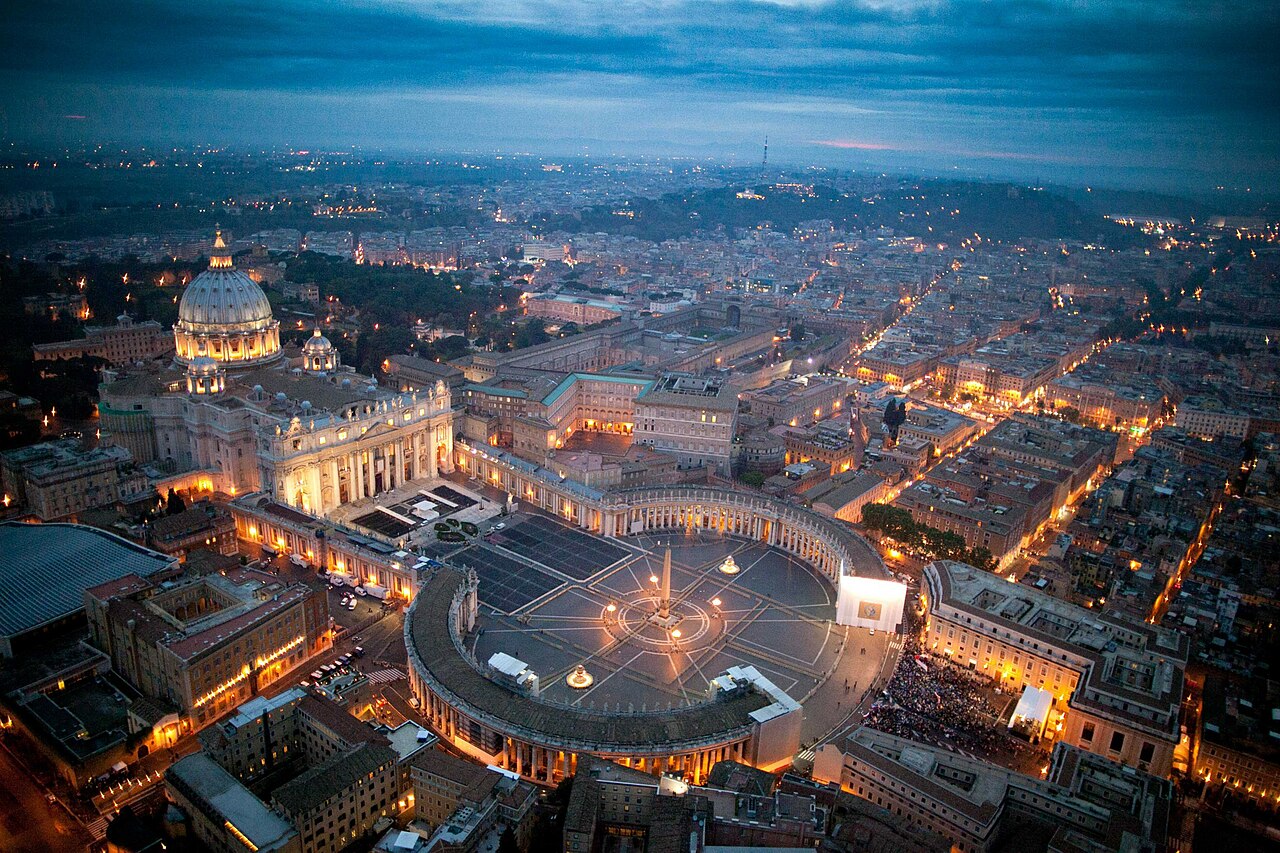
Rome & Vatican Pilgrimage: Tours with Papal Audience in 2026
The heart of Catholicism lies in Rome — where Peter was martyred, where the papacy was born, where 2,000 years of Church history lives in stone. A pilgrimage to Rome and the Vatican means Mass at the Apostle's tomb, the Wednesday General Audience with the Pope, the four major basilicas, the catacombs, and a city where every cobblestone carries a story. For couples, families, or first-time pilgrims, Rome is where your pilgrimage life begins.
By Alex Ferrara · Last updated

Ready to Walk Where the Apostles Walked?
Walk the four major basilicas, attend the Pope's General Audience, and celebrate Mass at the tomb of Saint Peter. The definitive Catholic pilgrimage.
At a glance
- 🗓️ Best time
- April–May or September–October (moderate climate, manageable crowds)
- ⏱️ Duration
- 7–10 days for a full basilicas circuit
- 💰 Price range
- From $2,200 per person (group tours); $3,500–$4,500 for small-group premium
- 📍 Key sites
- St. Peter's Basilica, Vatican Museums, Papal Audience, Four Major Basilicas, Catacombs
Why pilgrims travel to Rome
The call of Rome for Catholic pilgrims is unlike any other destination. This is the city where Saint Peter was crucified and buried — and where the basilica built above his tomb has stood for seventeen centuries. The Vatican City State, the smallest sovereign nation on earth, houses the successor of Peter and the administrative heart of 1.4 billion Catholics worldwide.
A pilgrimage to Rome is, at its core, a journey to the seat of Christian authority. But it is also a journey through time: the Catacombs of San Callisto preserve the tombs of 16 early popes and thousands of martyrs; the Basilica of Santa Maria Maggiore contains a relic venerated as a fragment of the infant Jesus's manger; the Church of San Pietro in Vincoli holds the chains said to have bound Peter in Jerusalem. Rome is not one sacred site — it is a city saturated with them.
In 2025, Pope Francis proclaimed an Extraordinary Holy Year. The spiritual benefits and pilgrim infrastructure remain robust into 2026: the Holy Doors of the four major basilicas remain open; the pilgrimage routes are well-signed; plenary indulgences are available at each of the four basilicas under the usual conditions. In practical terms, 2026 remains one of the strongest years in living memory for this pilgrimage.
The centrepiece for most Catholic pilgrims remains the Wednesday General Audience — the weekly encounter with the Pope in St. Peter's Square (or the Paul VI Audience Hall in winter). Free tickets are issued by the Prefecture of the Papal Household through the Holy See website. Operators who guarantee audience tickets as part of the package remove one logistical hurdle for most travellers.


Featured Pilgrimage Tour Operators
Pro-Rome Tours
Owner-operated Rome specialist — smallest group sizes and most flexible itineraries
$2,400
from / person
- Papal Audience ticket (guaranteed)
- Daily Mass at a Roman basilica
- Vatican Museums + Sistine Chapel guided entry
- Licensed resident guide
- Accommodation in the Vatican neighbourhood
Nawas International
Over 60 years of Vatican access — the most experienced Catholic pilgrim operator
$2,800
from / person
- Papal Audience ticket
- Four Major Basilicas circuit
- Catacombs of San Callisto
- Assisi day trip included
- Chaplain-led daily Mass
206 Tours
Since 1985 — largest Catholic pilgrimage operator; ideal for parish groups
$2,200
from / person
- Papal Audience ticket
- Vatican Museums + Sistine Chapel
- St. Peter's Basilica guided tour
- Daily Mass
- Farewell pilgrimage dinner
What to expect on a Rome pilgrimage
A well-designed Rome pilgrimage is structured around Mass, walking, and silence. Days typically begin early — the most sacred sites feel entirely different at 7:00 AM (quiet, meditative, almost empty) versus 11:00 AM (crowded, guided-tour buzzing). This is not a tourism trip with a church visit added at the end; it is a prayer journey that moves through historical sites.
Morning — Mass is typically celebrated at one of the basilicas, a catacombs chapel, or a Roman church with particular significance to the itinerary's theme. Licensed chaplain-led groups can often arrange private celebrations in side chapels of the major basilicas — a rare privilege unavailable to individual visitors.
Midday — Site visits: Vatican Museums and the Sistine Chapel (budget 3–4 hours; queues without pre-booked tickets can be 2–3 hours alone), Castel Sant'Angelo, the Roman Forum and Colosseum, Trastevere for the oldest intact Christian mosaics at Santa Maria in Trastevere.
Wednesday — The week's schedule pivots around the Papal Audience at 9:30 AM in St. Peter's Square. Arrive early — the Square holds 100,000 but fills quickly. Seats closest to the Pope's path require the advance booking your operator handles.
Accommodation — Most Catholic operators book convents, religious houses, or hotels in the Borgo or Prati district, both within walking distance of St. Peter's. You are positioned for early entry to the basilica before crowds arrive, and the area has dozens of good Roman restaurants within two blocks.
Fitness — Rome is a walking pilgrimage. Most programmes cover 5–8 km daily over cobblestones. Comfortable, broken-in shoes are non-negotiable.
Top sites you'll visit
- St. Peter's Basilica — The largest church in the world and the centre of Catholic life. Beneath the high altar lies the tomb of Saint Peter, accessible for veneration during visiting hours. Climb the dome for the most complete view of Rome.
- Vatican Museums + Sistine Chapel — 54 galleries and the ceiling Michelangelo spent four years painting. Arrive before opening or book the first-entry slot; a licensed guide transforms the experience from overwhelming to illuminating.
- Wednesday Papal Audience — The weekly encounter with the Pope, free with tickets from the Prefecture of the Papal Household. Held in St. Peter's Square (spring–autumn) or the Paul VI Hall (winter). Not to be confused with the Sunday Angelus.
- Catacombs of San Callisto — The largest early Christian catacombs in Rome, containing the tombs of 16 popes and thousands of martyrs. Located on the Appian Way, 30 minutes from the centre. The most important catacomb visit in the city.
- Basilica of St. John Lateran — The official cathedral of Rome and the Pope's seat as Bishop of Rome — technically the most important church in Catholicism, predating St. Peter's. The adjacent Scala Santa (Holy Stairs) is ascended by pilgrims on their knees.
- Santa Maria Maggiore — One of Rome's four major basilicas, containing a relic venerated as a fragment of the infant Jesus's manger, and the Salus Populi Romani icon of Our Lady — venerated by Pope Francis at the start of every international journey.
- San Paolo Fuori le Mura — The second-largest basilica in Rome, built over the tomb of Saint Paul. The atrium with its double colonnade is one of the most beautiful outdoor spaces in the city; the tomb itself is visible through a grate in the floor.
- Colosseum and Roman Forum — Essential historical context for the early Church: Christians were martyred here, and the Roman imperial system against which the early Church defined itself is visible in every stone. Many operators include a guided visit on a free afternoon.
- Trastevere and Santa Maria in Trastevere — The oldest Marian church in Rome, with 12th-century mosaics and a tradition of continuous prayer since the 4th century. The neighbourhood surrounding it is the most authentic Roman quarter remaining in the city centre.
- Assisi (day trip) — Optional but highly recommended: the hill town where Francis and Clare lived, 2 hours from Rome by train. The Basilica of San Francesco, built above his tomb, is one of the most important Gothic churches in Italy.
Planning your Rome pilgrimage
When to go — April–May and September–October offer the best climate and manageable crowds. July–August is intensely hot (35°C+) and extremely crowded. December–March has rain but dramatically fewer tourists; the Christmas celebrations at St. Peter's are exceptional.
Dress code — Shoulders and knees must be covered at all Vatican and church sites, for both men and women. Carry a scarf or light jacket for quick cover. Guards will turn you away at the entrance if you are underdressed.
Audience tickets — Free, issued by the Prefecture of the Papal Household via vatican.va. Apply 2–4 weeks in advance for individual requests; pilgrimage operators with Vatican connections obtain them as part of the package.
Budget — Tour packages covering accommodation, most meals, guides, and tickets run $2,200–$4,500 per person. Budget €15–25/day for lunches and pocket expenses. The Vatican Museums entry fee (€17–25) is typically included in packages; the Papal Audience is always free.
Groups vs. independent — Rome is navigable independently, but audience tickets, early-morning basilica access, and Vatican Museums priority entry are consistently easier to manage through an operator with Vatican connections. First-time pilgrims particularly benefit from a licensed guide for the 7 km of Vatican Museums galleries.
Frequently asked questions
How do I get tickets for the Papal Audience?
Free tickets are issued by the Prefecture of the Papal Household via the Holy See website (vatican.va). Most pilgrimage tour operators obtain them on your behalf as part of the package. Individual requests should be submitted 2–4 weeks in advance; operators with Vatican connections can often secure tickets closer to the date.
Is the Papal Audience guaranteed?
The General Audience takes place every Wednesday when the Pope is in Rome. It is suspended during August, Papal travel, and major liturgical seasons (Holy Week, Christmas). Most pilgrimage operators schedule around the Wednesday Audience and guarantee attendance or offer a full credit if it is cancelled.
What is a Plenary Indulgence and can I gain one in Rome?
A Plenary Indulgence is a full remission of temporal punishment due to sin. Rome's four major basilicas (St. Peter's, St. John Lateran, Santa Maria Maggiore, San Paolo Fuori le Mura) are traditional sites for gaining a plenary indulgence under the usual conditions: Confession, Eucharist, prayer for the Pope's intentions, and a spirit of detachment from sin. Jubilee Year indulgences remain available at the Holy Doors.
Can solo travellers join a group pilgrimage?
Yes — all three operators above accept individual bookings on their scheduled group departures. Group sizes typically range from 12–40 people. 206 Tours and Nawas both offer single supplements; Pro-Rome Tours often has room-share matching for solo pilgrims on request.
How far in advance should I book?
For spring (April–June) and autumn (September–October) departures, 6–9 months in advance is recommended — the most popular dates and Vatican-neighbourhood rooms sell first. For winter or August travel, 3–4 months is usually sufficient. Parish groups booking 20+ people should allow 12 months.
Is the Jubilee still active in 2026?
Pope Francis's Extraordinary Holy Year 2025 formally ended in January 2026, but the pilgrim infrastructure, Holy Door access at the four major basilicas, and plenary indulgence provisions continue. Many pilgrimage operators run 'Jubilee continuation' itineraries through 2026 that incorporate the same spiritual and logistical benefits.
Ready to Walk Where the Apostles Walked?
Compare tour packages from $2,200 — including Papal Audience tickets, daily Mass, and Vatican neighbourhood accommodation. Small groups. Chaplain optional.