Apostolic Journey to Africa — Algeria, Cameroon, Angola, Equatorial Guinea
13–23 Apr 202611days
11cities
18,000km
4countries
Follow the route
The journey · Africa
N
ALGERIACAMEROON
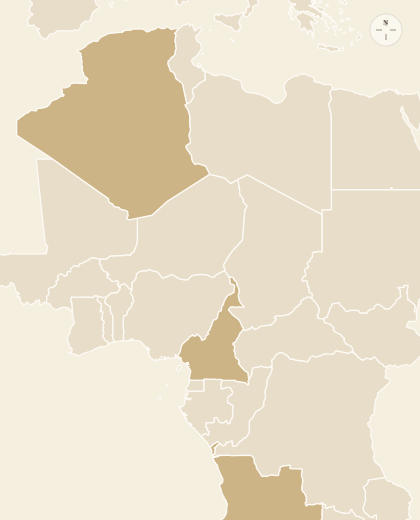
Tap a city to explore
i.AlgiersMon 13 Apr – Wed 15 Apr
🇩🇿
Algiers
36.74° N, 3.09° E · stop 1 of 11 · Mon 13 Apr – Wed 15 Apr
Capital of Algeria and Mediterranean crossroads where Arab, Berber, Ottoman and French heritage converge. The first papal visit to Algeria in history.
Schedule
Monday10:00
Arrival in Algiers
Pope Leo XIV arrived in Algiers, beginning the apostolic journey to Algeria, Cameroon, Angola, and Equatorial Guinea.
Houari Boumédiène International Airport
10:45
Visit to the Maqam Echahid Martyrs' Memorial
The Pope visited the Maqam Echahid, the monument commemorating Algeria's war of independence.
Maqam Echahid, Algiers
11:15
Courtesy Visit to the President
Pope Leo XIV paid a courtesy visit to Algerian President Abdelmadjid Tebboune at the Presidential Palace.
Presidential Palace, Algiers
12:00
Meeting with Authorities, Civil Society and Diplomatic Corps
The Pope addressed Algerian authorities, civil society representatives, and the diplomatic corps at the Djamaa el Djazair conference centre.
Djamaa el Djazair Conference Centre
15:45
Visit to the Grand Mosque of Algiers
Pope Leo XIV visited the Grand Mosque of Algiers, one of the largest in the world, meeting with Islamic religious leaders.
Grand Mosque of Algiers
16:35
Visit to the Augustinian Missionary Sisters' Shelter
The Pope made a private visit to the shelter run by the Augustinian Missionary Sisters in Bab El Oued.
Bab El Oued, Algiers
17:10
Meeting with the Algerian Catholic Community
The Pope met with the small Catholic community of Algeria at the historic Basilica of Our Lady of Africa.
Basilica of Our Lady of Africa
The journey so far
ii.AnnabaTue 14 Apr
🇩🇿
Annaba
36.90° N, 7.77° E · stop 2 of 11 · Tue 14 Apr
Ancient Hippo Regius, where Saint Augustine served as bishop from 395–430 AD. His Confessions and City of God shaped Western Christianity for 1,600 years.
Schedule
Tuesday10:30
Arrival in Annaba
Pope Leo XIV flew from Algiers to Annaba to visit the city of Saint Augustine, bishop and Doctor of the Church.
Rabah Bitat Airport, Annaba
11:00
Visit to the Archaeological Site of Hippo
The Pope visited the ruins of ancient Hippo, where Saint Augustine served as bishop from 395 until his death in 430 AD.
Hippo (Annaba)
11:35
Visit to Elderly Care Home
Pope Leo XIV visited elderly residents and the sisters who care for them at the home run by the Little Sisters of the Poor.
Little Sisters of the Poor, Annaba
18:00
Holy Mass
Pope Leo XIV celebrated Holy Mass at the Basilica of Saint Augustine, built on the site where the great theologian lived and worked.
Basilica of Saint Augustine, Annaba
The journey so far
iii.YaoundéWed 15 Apr – Sat 18 Apr
🇨🇲
Yaoundé
3.85° N, 11.50° E · stop 3 of 11 · Wed 15 Apr – Sat 18 Apr
Capital of Cameroon, the "City of Seven Hills" and seat of a vibrant Catholic archdiocese — gateway to Central Africa's rich Christian heritage.
Schedule
Wednesday15 Apr
15 Apr · 15:20
Arrival in Yaoundé
Pope Leo XIV arrived in Yaoundé, beginning the Cameroonian stage of the apostolic journey through Africa.
Yaoundé-Nsimalen International Airport
15 Apr · 16:20
Courtesy Visit to the President
The Pope paid a courtesy visit to Cameroonian President Paul Biya at the Presidential Palace in Yaoundé.
Presidential Palace, Yaoundé
15 Apr · 17:05
Meeting with Authorities, Civil Society and Diplomatic Corps
Pope Leo XIV addressed Cameroonian authorities, civil society representatives, and the diplomatic corps at the Presidential Palace.
Presidential Palace, Yaoundé
15 Apr · 17:45
Visit to the Ngul Zamba Orphanage
The Pope visited children and staff at the Ngul Zamba orphanage, which cares for children orphaned by AIDS and other causes.
Ngul Zamba Orphanage, Yaoundé
Friday17 Apr
17 Apr · 17:30
Meeting with the University Community
Pope Leo XIV met with academics, students, and researchers at the Catholic University of Central Africa.
Catholic University of Central Africa, Yaoundé
Saturday18 Apr
18 Apr · 09:30
Holy Mass
Pope Leo XIV celebrated Holy Mass on the esplanade of Yaoundé-Ville Airport before departing for Angola.
Yaoundé-Ville Airport
The journey so far
iv.BamendaThu 16 Apr
🇨🇲
Bamenda
5.96° N, 10.16° E · stop 4 of 11 · Thu 16 Apr
Heart of Cameroon's English-speaking Catholic community and a centre of faith amidst calls for dialogue and reconciliation.
Schedule
Thursday11:00
Arrival in Bamenda
Pope Leo XIV flew from Yaoundé to Bamenda in the Anglophone Northwest Region of Cameroon, long affected by conflict.
Bamenda Airport
11:30
Peace Meeting with the Bamenda Community
The Pope met with community leaders, internally displaced persons, and representatives of all sides of the Anglophone conflict at the Cathedral of Saint Joseph.
Cathedral of Saint Joseph, Bamenda
15:15
Holy Mass
Pope Leo XIV celebrated Holy Mass at Bamenda Airport before returning to Yaoundé.
Bamenda Airport
The journey so far
v.DoualaFri 17 Apr
🇨🇲
Douala
4.05° N, 9.77° E · stop 5 of 11 · Fri 17 Apr
Cameroon's economic capital and largest city, with a diverse Catholic community shaped by decades of missionary work along the Atlantic coast.
Schedule
Friday09:55
Arrival in Douala
Pope Leo XIV arrived at Douala International Airport for a one-day visit to Cameroon's economic capital.
Douala International Airport
11:00
Holy Mass
Pope Leo XIV celebrated Holy Mass at the Japoma Stadium in Douala before a large gathering of faithful.
Japoma Stadium, Douala
13:20
Visit to Saint Paul Catholic Hospital
The Pope visited patients and medical staff at the Saint Paul Catholic Hospital, one of the leading Catholic healthcare facilities in Cameroon.
Saint Paul Catholic Hospital, Douala
The journey so far
vi.LuandaSat 18 Apr – Tue 21 Apr
🇦🇴
Luanda
8.84° S, 13.23° E · stop 6 of 11 · Sat 18 Apr – Tue 21 Apr
Capital of Angola. Catholicism has been present here since Portuguese missionaries arrived in 1491, making Angola one of Africa's oldest Christian nations.
Schedule
Saturday18 Apr
18 Apr · 15:00
Arrival in Luanda
Pope Leo XIV arrived in Luanda, beginning the Angolan stage of the apostolic journey.
4 de Fevereiro International Airport, Luanda
18 Apr · 15:40
Courtesy Visit to the President
The Pope paid a courtesy visit to Angolan President João Lourenço at the Presidential Palace.
Presidential Palace, Luanda
18 Apr · 16:15
Meeting with Authorities, Civil Society and Diplomatic Corps
Pope Leo XIV addressed Angolan authorities, civil society representatives, and the diplomatic corps.
Luanda
Sunday19 Apr
19 Apr · 10:00
Holy Mass
Pope Leo XIV celebrated Holy Mass in the planned city of Kilamba, gathering the faithful of the Angolan capital.
Kilamba, Luanda
Monday20 Apr
20 Apr · 17:30
Meeting with Bishops, Priests and Pastoral Workers
The Pope met with the clergy, religious, and lay pastoral workers of Angola at the Our Lady of Fatima Parish.
Our Lady of Fatima Parish, Luanda
The journey so far
vii.MuximaSun 19 Apr
🇦🇴
Muxima
9.56° S, 13.92° E · stop 7 of 11 · Sun 19 Apr
Home to the Shrine of Our Lady of Muxima, Angola's most revered Marian sanctuary, drawing millions of pilgrims each year to its 16th-century colonial chapel.
Schedule
Sunday16:30
Recitation of the Holy Rosary
Pope Leo XIV led the recitation of the Holy Rosary at the Mama Muxima Sanctuary, Angola's most important Marian shrine.
Mama Muxima Sanctuary, Muxima
The journey so far
viii.SaurimoMon 20 Apr
🇦🇴
Saurimo
9.66° S, 20.39° E · stop 8 of 11 · Mon 20 Apr
Capital of Lunda Sul, Angola's diamond-rich eastern province. The papal visit shines a light on communities far from the capital.
Schedule
Monday09:30
Arrival in Saurimo
Pope Leo XIV arrived in Saurimo, the capital of Lunda Sul province in eastern Angola.
Saurimo Airport
09:45
Visit to Elderly Care Facility
The Pope visited elderly residents and their caregivers at a care facility in Saurimo.
Saurimo
11:15
Holy Mass
Pope Leo XIV celebrated Holy Mass on the main esplanade of Saurimo, gathering the faithful of Angola's diamond region.
Saurimo Esplanade
The journey so far
ix.MalaboTue 21 Apr – Thu 23 Apr
🇬🇶
Malabo
3.75° N, 8.78° E · stop 9 of 11 · Tue 21 Apr – Thu 23 Apr
Capital of Equatorial Guinea on the volcanic island of Bioko. Over 90% of the population is Catholic — one of Africa's most intensely Catholic nations.
Schedule
Tuesday21 Apr
21 Apr · 11:45
Arrival in Malabo
Pope Leo XIV arrived in Malabo, beginning the Equatorial Guinea stage of the apostolic journey, the first papal visit to this country.
Malabo International Airport
21 Apr · 12:30
Courtesy Visit to the President
The Pope paid a courtesy visit to President Teodoro Obiang Nguema Mbasogo at the Presidential Palace.
Presidential Palace, Malabo
21 Apr · 13:00
Meeting with Authorities, Civil Society and Diplomatic Corps
Pope Leo XIV addressed Equatorial Guinea's authorities, civil society representatives, and the diplomatic corps.
Presidential Palace, Malabo
21 Apr · 16:00
Meeting with the Cultural Sector
The Pope met with academics, students, and cultural figures at the National University of Equatorial Guinea campus bearing his name.
Pope Leo XIV National University campus, Malabo
21 Apr · 17:15
Visit to the Jean Pierre Olie Psychiatric Hospital
Pope Leo XIV visited patients and healthcare workers at the Jean Pierre Olie Psychiatric Hospital in Malabo.
Jean Pierre Olie Psychiatric Hospital, Malabo
Thursday23 Apr
23 Apr · 10:00
Holy Mass
Pope Leo XIV celebrated the concluding Holy Mass of his visit to Equatorial Guinea at the Malabo Stadium, completing the African apostolic journey.
Malabo Stadium
The journey so far
x.MongomoWed 22 Apr
🇬🇶
Mongomo
1.63° N, 13.60° E · stop 10 of 11 · Wed 22 Apr
Site of the new national cathedral, a symbol of the Church's growing presence in mainland Equatorial Guinea (Río Muni).
Schedule
Wednesday09:10
Arrival in Mongomo
Pope Leo XIV arrived at Mengomeyén Airport in Mongomo.
Mengomeyén Airport, Mongomo
10:30
Holy Mass
Pope Leo XIV celebrated Holy Mass at the Basilica of the Immaculate Conception in Mongomo.
Basilica of the Immaculate Conception, Mongomo
12:30
Visit to the Papa Francisco Technical School
The Pope visited the Papa Francisco Technical School in Mongomo, a vocational training institution.
Papa Francisco Technical School, Mongomo
The journey so far
xi.BataWed 22 Apr
🇬🇶
Bata
1.86° N, 9.77° E · stop 11 of 11 · Wed 22 Apr
Largest city on the mainland of Equatorial Guinea and the final stop of the Pope's historic African journey.
Schedule
Wednesday15:50
Arrival in Bata
Pope Leo XIV arrived at Bata International Airport for his visit to Equatorial Guinea's mainland city.
Bata International Airport
16:50
Prison Visit
Pope Leo XIV visited inmates and staff at the Bata Prison, extending the Church's ministry of mercy to those deprived of liberty.
Bata Prison
17:25
Prayer at the Memorial for Explosion Victims
The Pope prayed at the memorial for victims of the March 7, 2021 explosion at the military barracks in Bata, which killed more than 100 people.
Bata
18:10
Meeting with Young People and Families
Pope Leo XIV concluded his visit to Bata with a meeting with young people and families at the Bata Stadium.
Bata Stadium
The journey so far
i.
The journey so far
AlgiersMon 13 AprVisited
AnnabaTue 14 AprVisited
YaoundéWed 15 AprVisited
BamendaThu 16 AprVisited
DoualaFri 17 AprVisited
LuandaSat 18 AprVisited
MuximaSun 19 AprVisited
SaurimoMon 20 AprVisited
MalaboTue 21 AprVisited
MongomoWed 22 AprVisited
BataWed 22 AprVisited
“
Do not be afraid. Open wide the doors to Christ.Saint John Paul II · First Homily, 22 October 1978
Following the trail to Luanda?
Experiences in Luanda
Hand-picked tours and skip-the-line entries, a short walk from where the Pope will be.