Pope Leo XIV Addresses Borgo Laudato si’ Dialogues
Pope Leo XIV welcomed participants on Friday in the inaugural edition of the Borgo Laudato si’ Dialogues, which took place at Borgo Laudato si’ in Castel Gandolfo. Over the course of two days, these individuals engaged…
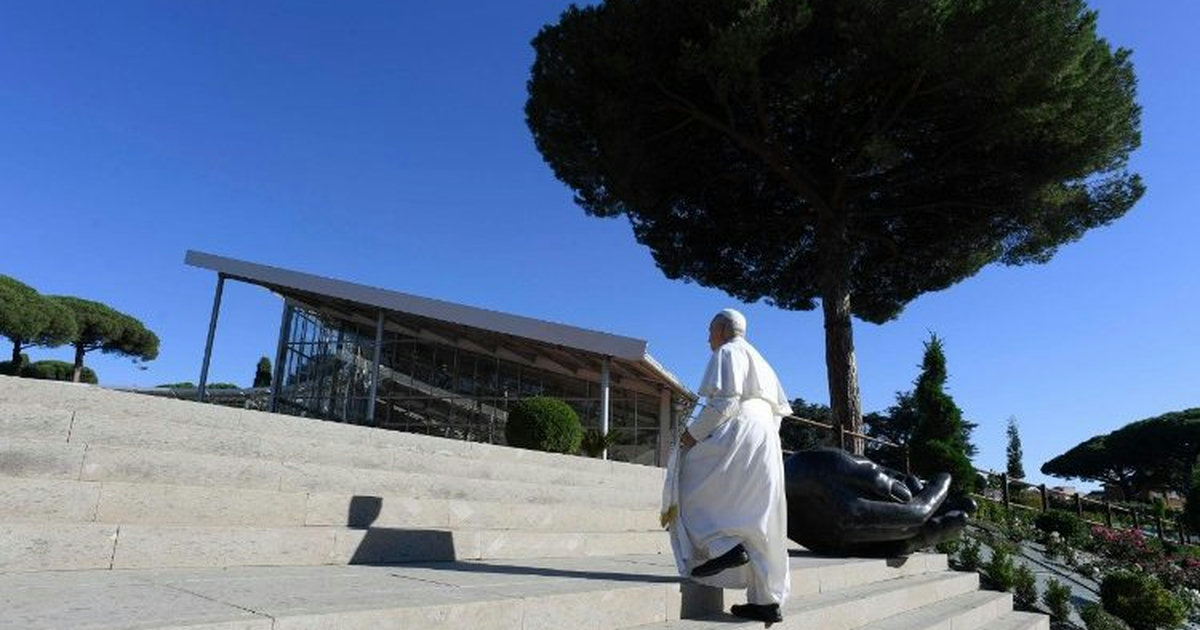
Pope Leo XIV welcomed participants on Friday in the inaugural edition of the Borgo Laudato si’ Dialogues, which took place at Borgo Laudato si’ in Castel Gandolfo. Over the course of two days, these individuals engaged in discussions addressing some of humanity's pressing challenges, including the role of artificial intelligence in human dignity, healthy ageing, sports diplomacy, and environmental sustainability.
This initiative aligns with the overarching mission of Borgo Laudato si’, which was established in the Papal Villas of Castel Gandolfo as a center for integral ecology, inspired by Pope Francis’ 2015 Encyclical, Laudato si’. The dialogues drew experts, practitioners, and leaders from a variety of countries and fields to explore how ethical leadership can spur ecological, social, and economic transformations.
In his closing remarks to the attendees, Pope Leo characterized the gathering as “the first step of a process aimed at renewing and reimagining moral leadership in a world that today appears fractured and forgetful of its historical roots.” He emphasized the need for dialogue in tackling contemporary issues, stating, “We seek to identify new paths for the common good and for promoting a dignified life for all.” The Pope reiterated his call to engage with “all men and women of our time, with whom we share in the events, questions and aspirations of humanity.”
Warning against what he described as a growing “spiritual and cultural blindness,” Pope Leo cautioned that society risks disconnecting from its historical memory. He criticized a “false pragmatism” that attempts to sever the roots of history and cautioned that even advocates of moral principles might inadvertently fall into “historical nihilism,” ignoring the potential for repeating the tragedies of the twentieth century.
Pope Leo underscored that the dialogues were motivated by the Church’s vision of synodality, which seeks to unite diverse perspectives around common concerns. He expressed appreciation for the participants' dedication to advancing ecological, social, and economic renewal amid their varied backgrounds and expertise.
The Pope examined the ethical dilemmas presented by advancing technology and economic development, presenting a dichotomy between two societal visions. He articulated that while there might be a temptation to emulate the “Tower of Babel,” which symbolizes the idolatry of profit at the expense of the vulnerable, Christians must instead work towards “the construction of the New Jerusalem, the civilization of love.”
This civilization, he explained, is not built on grand gestures but rather through everyday acts of fidelity and care. “The civilization of love will not arise from a single or spectacular gesture, but from the sum total of small and steadfast acts of fidelity that serve as a bulwark against dehumanization,” he stated.
Furthermore, Pope Leo highlighted the significance of holding the meeting amid the natural beauty of the Pontifical Gardens at Borgo Laudato si’. He noted that participants could draw inspiration from “the beauty of creation - and of the Creator” while linking local experiences to broader global responsibilities. In his closing, the Holy Father expressed gratitude for their commitment and hope that the process initiated at Castel Gandolfo would persist through future encounters and initiatives.


