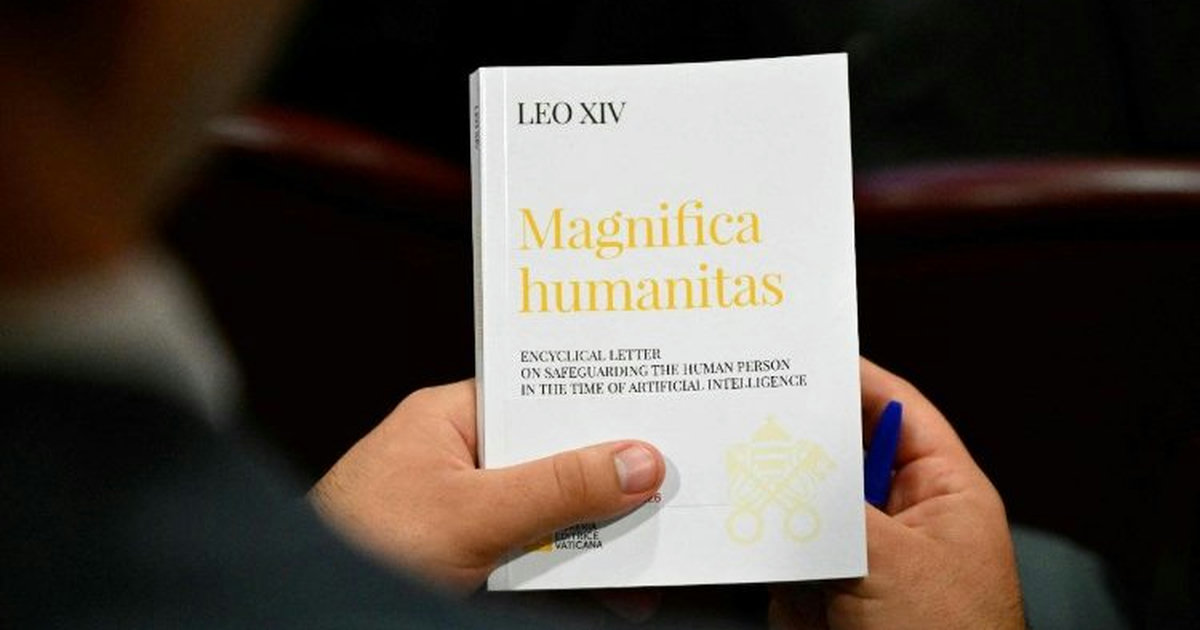
Pope Leo XIV’s encyclical ‘Magnifica humanitas’ provides significant anthropological insights for AI developers, particularly framed by Taylor Black, Microsoft’s Director of AI and Venture Ecosystems. This engagement in…
Pope Leo XIV’s encyclical ‘Magnifica humanitas’ provides significant anthropological insights for AI developers, particularly framed by Taylor Black, Microsoft’s Director of AI and Venture Ecosystems. This engagement indicates the Church’s deeper involvement with technological advancements, especially in the booming field of artificial intelligence.
The ascent of consumer-oriented AI systems in recent years prompted the Church to forge stronger relationships with technology companies. However, this collaboration has also drawn criticism regarding the Church’s engagement with tech companies to help direct the development of AI, as well as criticism within the tech world of those who dialogue with the Church. Taylor Black contends that neglecting these aspects hinders tech companies from grasping the intricacies of user cognition.
Black, who balances roles at Microsoft and the Catholic University of America, articulates that technology itself lacks a defined anthropology—a foundational view regarding human nature and behavior. AI systems often operate on probabilistic models, creating interactive experiences that depend heavily on user input. Consequently, designers must possess a solid understanding of how users think to foster effective human-technology interactions.
In response to contemporary advancements, the Dicastery for the Doctrine of the Faith and the Dicastery for Culture and Education issued a document in January 2025 articulating the relationship between artificial intelligence and human intelligence. Subsequently, on May 25, 2026, Pope Leo XIV published his encyclical, reinforcing the Church's extensive comprehension of human nature in the context of emerging AI technologies.
Black noted that Pope Leo’s encyclical recognizes that AI can shape its users’ development if they forego critical thinking and accept whatever the AI chatbot proposes without verification. This risk is especially relevant for children, whose prefrontal lobe continues developing into their mid-20s.
In an attempt to be helpful, AI can also change our voice or our face, sometimes pushing our real self to the side in favor of an ideal version.
“It's forming us in a way that we can assent to if we feel like it,” said Black. “But again, if we're children, then we can't really fully assent to that shaping without our own creative input to it, of our voice, of our way of being in the world, as well as adults can.”


