Cardinal Brislin Discusses Progress at Extraordinary Consistory
Opening the third session of the Extraordinary Consistory, Cardinal Stephen Brislin, Archbishop of Johannesburg, encouraged fellow Cardinals to reflect on how humanity constructs its future amidst advancing technologica…
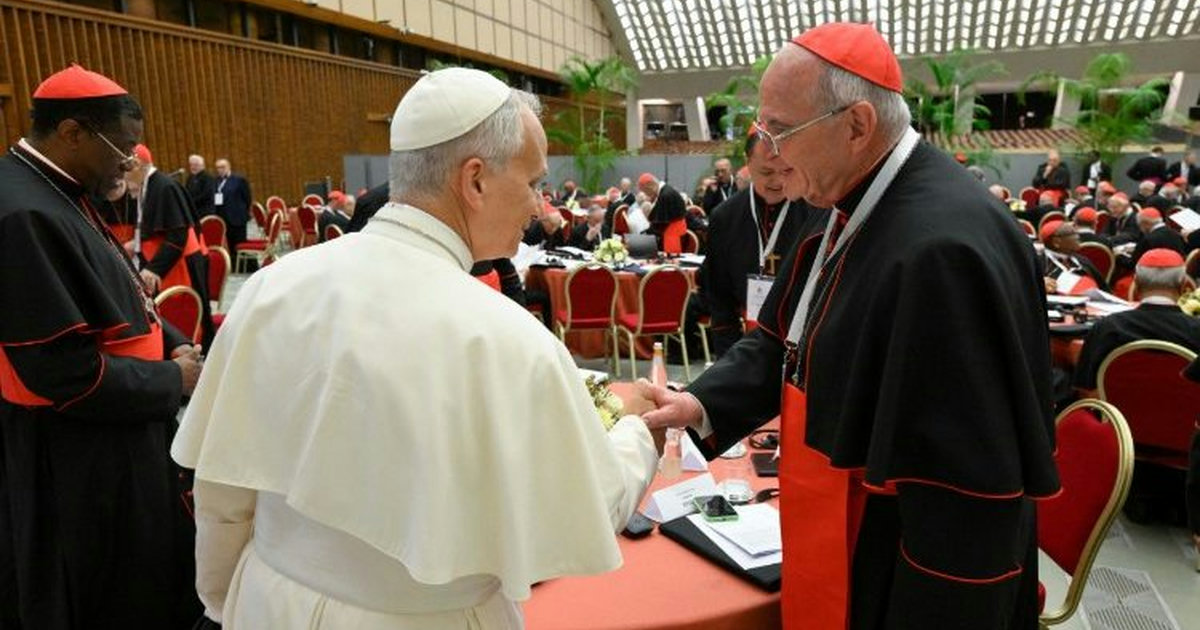
Opening the third session of the Extraordinary Consistory, Cardinal Stephen Brislin, Archbishop of Johannesburg, encouraged fellow Cardinals to reflect on how humanity constructs its future amidst advancing technological power. The meeting revolved around the theme “Building for the common good: the building sites of our time.”
Cardinal Brislin emphasized the significance of Pope Leo XIV’s encyclical Magnifica humanitas, illustrating the connection between its introduction and conclusion. He posited that these sections reveal the encyclical’s theological framework, with the opening raising pressing questions about humanity's future, while the conclusion offers a Christian interpretation through the virtues reflected in historical contexts and sustained by prayer.
During his address, the Cardinal made an intriguing comparison between the cities of Babel and Jerusalem, asserting that both symbolize collective human effort. He argued that while Babel symbolizes a self-referential pursuit leading to disintegration, Jerusalem represents a framework in which human intelligence, aligned with divine purpose, enhances the dignity of every individual.
The Cardinal framed a contemporary question that arises from this discussion: what character does human endeavor adopt in an age characterized by powerful tools? He remarked that this inquiry pertains not only to artificial intelligence and emerging technologies but also to the broader issue of whether advancements are accompanied by responsibility or whether they spawn new exclusions.
In his reflections, Cardinal Brislin asserted that Magnifica humanitas summons all to consider how collaborative building should unfold in society. He articulated that technical capabilities are inherently political, economic, social, and educational, thus affecting the shared quality of life. For believers, he highlighted synodality as a manifestation of communion from which the Church evolves, granting Christians the courage to engage with historical building projects.
He detailed a “grammar of building” delineated in the encyclical, characterized by four key components: desire, limitation, shared responsibility, and discernment. The desire for happiness must be respected within the confines of truth, and acknowledgment of human limitations reminds individuals that life is a gift to be cherished. Moreover, shared responsibility reflects the principle of subsidiarity—no individual possesses complete ownership over any project, and collaboration is crucial. Discernment, guided by the Church’s social doctrine, is essential to differentiate between what is beneficial for individuals and what leads to dependence or exclusion.
According to Cardinal Brislin, the culmination of this “grammar of building” in the encyclical is expressed through the theological virtues of faith, charity, hope, and prayer. He noted that faith recognizes divine mercy throughout history, charity draws its strength from the Eucharist, hope fosters the creation of a loving society, and prayer establishes the Church’s openness to the Holy Spirit’s guidance.
Concluding his address, Cardinal Brislin reiterated that Magnifica humanitas entrusts the Church with the significant role of confronting historical challenges in a distinctive manner, emphasizing a synodal approach deeply rooted in faith, charity, and hope while focusing on service to the human person.


