The Pope's Unique Role as Shepherd and Sovereign
The Vatican's Editorial Director, Andrea Tornielli, reflects on the role of the Successor of Peter and his Magisterium. When addressing matters such as war, peace, migration, or the impact of artificial intelligence, th…
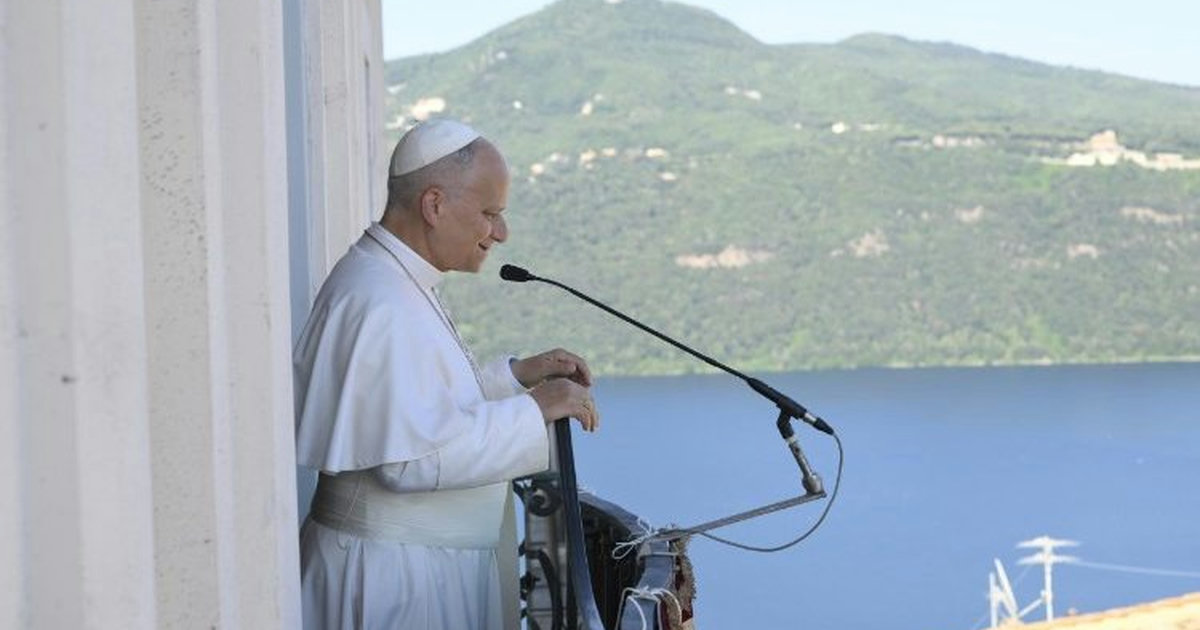
The Vatican's Editorial Director, Andrea Tornielli, reflects on the role of the Successor of Peter and his Magisterium.
When addressing matters such as war, peace, migration, or the impact of artificial intelligence, the Successor of Peter emphasizes his position primarily as a spiritual leader. This distinction is important because even though the Bishop of Rome, by virtue of the Lateran Pacts of 1929, serves as the sovereign of the world’s smallest state, it does not imply that he operates or communicates in a political capacity concerning global issues.
Pope Paul VI articulated this perspective during his address to the United Nations General Assembly on October 4, 1965. He remarked on the duality of the gathering, characterized by both simplicity and greatness. He noted, “This gathering, as you are all well aware, has a twofold nature: it is marked at one and the same time by simplicity and by greatness. By simplicity because the one who is speaking to you is a man like yourselves. He is your brother, and even one of the least among you who represent sovereign States.” He emphasized that his role lacked any ambition for temporal power. “We have nothing to ask, no question to raise; at most a desire to formulate, a permission to seek: that of being allowed to serve you,” he said, portraying his mission as one rooted in love and humility.
The arrangement of papal sovereignty, established nearly a century ago, was designed to ensure the independence of the Vicar of Christ from other states and not to suggest dual roles. Critics of this duality may misinterpret the papal head of state as overshadowing the True Shepherd’s mission, which is to serve as the universal Shepherd of the Catholic Church. The Pope’s speeches are intended to reach not just Catholics but all individuals of goodwill, sharing the essence of the Gospel focused on love and peace.
This mission has been echoed by others in the Church, such as Giovanni Battista Montini, who became Pope Paul VI. In a 1962 address on the eve of the Second Vatican Council, he noted the strengthened function of the papacy as a witness to the Gospel following the loss of temporal power. He stated, “It was then that the papacy resumed with unusual vigor its functions as teacher of life and witness to the Gospel,” serving a significant role in spiritual governance and moral influence.
Current discussions around human rights, such as the need for respecting life at every stage, calls for peace, and the treatment of migrants, further illustrate that when the Pope speaks, he articulates the Gospel's call rather than adopting a political platform. His advocacy for social justice, care for the environment, and religious freedom underscores his focus on ethical principles rather than political objectives, fundamentally separating his spiritual mission from the trappings that accompany temporal authority.


